
"Central Mountains"
5000 article(s) found

Environmental characteristics of Colombian Coffee Plantation Flavor and Taste of Lazimus Manor
The north-central Santander producing area consists of two major geographical areas: the Magdalena Basin and the mountains of the eastern mountains. The Magdalena basin is relatively flat, with a dry and hot climate in the central plain. The eastern mountains have rugged terrain, steep slopes and an altitude of 4000 meters. The climate is affected by different elevations, which makes it show a variety of meteorological zones, resulting in coffee.

Cuban Altura Lavado (Cuban Alpine Crystal) Coffee Bean Flavor introduction Baking suggestion
Cuba (Cuba) Altura Lavado (Cuban Alpine Crystal) Coffee beans the best place to produce Cuban coffee is the Central Mountains region (Escambray), where there are precious minerals such as quartz crystals in addition to coffee, so the Central Mountains area (Escambray) is also known as Crystal Mountain Lavado is generally translated as Lavado, Altura Lavado (small Crystal) this bean is general.

Basic knowledge of Fine Coffee in South America
[Colombia] is the world's second-largest coffee producer, accounting for about 12% of the world's annual output, which is much lower than Brazil's 30% to 35%, but most of them are high-quality mountain-washed beans. Central Colombia is divided into valleys by three north-south longitudinal mountains, of which the central and eastern mountains are the main coffee producing areas. The coffee here is named after the distributed market

South American coffee history boutique coffee bean species
[Colombia] is the world's second-largest coffee producer, accounting for about 12% of the world's annual output, which is much lower than Brazil's 30% to 35%, but most of them are high-quality mountain-washed beans. Central Colombia is divided into valleys by three north-south longitudinal mountains, of which the central and eastern mountains are the main coffee producing areas. The coffee here is named after the distributed market

Introduction of boutique coffee producing areas: coffee beans from Central and South America, Mexico, Jamaica, Brazil, Goran.
Coffee beans are the essential raw materials for making coffee, and there are more coffee bean producing areas, while some continents write less. The following editor will introduce to you the five major coffee bean producing areas in Central and South America. 1. Mexican coffee production is concentrated in the south near Guatemala, with mountains running through the east and west, making its mountains sloping, making it ideal for coffee.

The Cultural History of Coffee in South America
[Colombia] is the world's second-largest coffee producer, accounting for about 12% of the world's annual output, which is much lower than Brazil's 30% to 35%, but most of them are high-quality mountain-washed beans. Central Colombia is divided into valleys by three north-south longitudinal mountains, of which the central and eastern mountains are the main coffee producing areas. The coffee here is named after the distributed market

Tarasu Latin American coffee Costa Rican coffee the mountains of central Costa Rica
Make a cup of Costa Rican coffee, pour it into the cup and taste it carefully, then you can appreciate its unique fragrance and rich flavor. The soft, moderate sour taste and rich aroma make the final rhyme reverberate in the throat for a long time, unforgettable. It has even been commented that some of the flavors of Costa Rican coffee are very similar to those of Kona and the Blue Mountains of Jamaica. Costa Rica's coffee industry was originally made up of

Costa Rican goddess manor geisha fine coffee beans in the mountains of central Costa Rica
Origin: Dota,Tarrazu,Costa Rica bean seed: Geisha processing plant: El Diosa altitude: 1850m treatment: Washed picking processing time: 04max 2014 baking degree: Light Green Apple fragrance, Sugarcane Sweet Goddess Manor is located in the Dota region of Costa Rica's most famous tarrazu region, famous for producing micro-batch sub-geisha / Rosa varieties. In 1865,

A brief introduction to the main coffee producing areas in Central America and their well-known representative coffee flavor characteristics
For the exchange of professional baristas, please follow the coffee workshop (Wechat official account cafe_style) Guatemala (Guatemala) well-known representative coffee: Antigua (Antigua), Vivette Nango (Huehuetenango) Guatemala's latitude is about 15 degrees, the left is adjacent to the Pacific Ocean, the right is the Caribbean Sea. The Sierra Mountains on this side of the Pacific Ocean are the main sources of Guatemalan coffee.

Basic knowledge of Fine Coffee Coffee History of South America
[Colombia] is the world's second-largest coffee producer, accounting for about 12% of the world's annual output, which is much lower than Brazil's 30% to 35%, but most of them are high-quality mountain-washed beans. Central Colombia is divided into valleys by three north-south longitudinal mountains, of which the central and eastern mountains are the main coffee producing areas. The coffee here is named after the distributed market

Introduction to Colombian coffee bean producing area, manor, flavor, characteristics and taste
The most famous Medellin in the Central Mountains has a thick texture, rich aroma and well-balanced sour taste, while Armania and Manizares are not so good, but in the market these three kinds of beans will be regarded as the same kind of beans to circulate, called "MAM". If you buy a bag of MAM, it means it could be any of these three kinds of beans, which is similar to Medellin.

The Development of Coffee beans Coffee History of South America
[Colombia] is the world's second-largest coffee producer, accounting for about 12% of the world's annual output, which is much lower than Brazil's 30% to 35%, but most of them are high-quality mountain-washed beans. Central Colombia is divided into valleys by three north-south longitudinal mountains, of which the central and eastern mountains are the main coffee producing areas. The coffee here is named after the distributed market
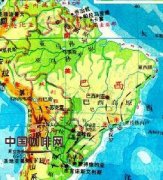
Basic knowledge of boutique coffee introduction to coffee in South America
[Colombia] is the world's second-largest coffee producer, accounting for about 12% of the world's annual output, which is much lower than Brazil's 30% to 35%, but most of them are high-quality mountain-washed beans. Central Colombia is divided into valleys by three north-south longitudinal mountains, of which the central and eastern mountains are the main coffee producing areas. The coffee here is named after the distributed market

The Central Valley of Costa Rica introduces the history of coffee cultivation in Sonora, a long manor.
Country: Costa Rica: central Valley Manor: Sonora Manor processing: sun flavor: black cherry, hazelnut, toffee, berries, nectarine Central Valley, or Valle Central in Spain, is a plateau in central Costa Rica. The land in the valley is a relative plain surrounded by several mountains and volcanoes of the Central Mountains. The area has Goth.

The History and Culture of Fine Coffee Coffee History of South America
[Colombia] is the world's second-largest coffee producer, accounting for about 12% of the world's annual output, which is much lower than Brazil's 30% to 35%, but most of them are high-quality mountain-washed beans. Central Colombia is divided into valleys by three north-south longitudinal mountains, of which the central and eastern mountains are the main coffee producing areas. The coffee here is named after the distributed market

Tarasu, a valley in the central mountains of Costa Rica's coffee-producing region.
Excellent Costa Rican coffee is called extra hard beans, and this kind of coffee can grow at an altitude of more than 1500 meters. Altitude has always been a problem for coffee growers. The higher the altitude, the better the coffee beans, not only because the higher altitude can increase the acidity of the coffee beans and thus increase the flavor, but also because the night temperature at the higher altitude is lower, which can make the trees grow slowly.
Coffee bean producing areas-Central America-Guatemala (Guatemala)
Well-known representative coffee: Antigua (Antigua), Vivette Nango (Huehuetenango) the latitude of Guatemala is about 15 degrees, adjacent to the Pacific Ocean on the left and the Caribbean Sea on the right. The Sierra Mountains on this side of the Pacific Ocean are the main coffee-growing areas in Guatemala. Because the mountains are very long and the regional climate changes are great, it has created the seven largest coffee producing areas in the country.
Coffee bean producing area-Central America-Panama (Panama)
Famous representative coffee: Panama Panama is bordered by Costa Rica to the west and Colombia to the east of South America. Most of its coffee is grown in the mountains near Costa Rica to the west. Panamanian coffee has a medium and uniform flavor and texture, with a blue mountain temperament, so it is said that Panamanian coffee is often used to imitate the high-priced Hawaiian Kona or the Jamaican Blue Mountains. But Ba

Coffee bean producing areas-Central America-Panama
Famous representative coffee: Panama Panama is bordered by Costa Rica to the west and Colombia to the east of South America. Most of its coffee is grown in the mountains near Costa Rica to the west. Panamanian coffee has a medium and uniform flavor and texture, with a blue mountain temperament, so it is said that Panamanian coffee is often used to imitate the high-priced Hawaiian Kona or the Jamaican Blue Mountains. But Ba
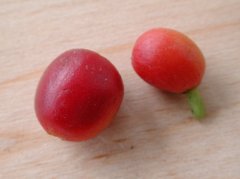
Coffee bean producing areas-Central America-Guatemala
Well-known representative coffee: Antigua (Antigua), Vivette Nango (Huehuetenango) the latitude of Guatemala is about 15 degrees, adjacent to the Pacific Ocean on the left and the Caribbean Sea on the right. The Sierra Mountains on this side of the Pacific Ocean are the main coffee-growing areas in Guatemala. Because the mountains are very long and the regional climate changes are great, it has created the seven largest coffee producing areas in the country.